INVICTUS

I am master of my fate, I am captain of my soul (from a poem by William Ernest Hendley)
There is no chance, no destiny, no fate, that can circumvent or hinder or control the firm resolve of a determined soul ( quote by Ella Wheeler Wilcox)

Tuesday, 2 November 2021

What is my bliss? Where is my bliss?

First and foremost, what is bliss? While we have all heard the term “follow your bliss,” a phrase that can be heard constantly today, many of us aren’t quite sure what it really means. And why is it we have to find and follow our bliss?

The dictionary gives the meaning of bliss as perfect happiness, supreme happiness. It is joy, pleasure, delight, happiness, gladness, ecstasy, elation, rupture, euphoria, heaven, paradise, seventh heaven, cloud nine, fulfilled, utopia, Eden, Arcadia, halcyon days, sense of purpose, top of the world, oblivious of everything else, 

While bliss may sound like a mood or a state of happiness,  some people say it’s everything but that. Really? It is believed that trying to force bliss can cause a strain and an insincere state of mind. When someone around us is pretending to be happy, it’s very clear that it’s forced. Rather than being an attitude, it’s something that becomes a fundamental part of our nature. 

Our life has become so economic and practical, I would say even frantic, in its orientation that, as you get older, the claims of the moment upon you are so great, you hardly know where the hell you are, or what it is you really want to do. You are always doing something that is required of you, expected of you, what peers, parents, society deemed you should do. What and where then here is your bliss? You have to find it yourself.

The majority’s function in relation to the spirit is to try to listen and to open up to someone who’s had an experience beyond that of food, shelter, progeny, and wealth.

We are having experiences all the time which may on occasion render some sense of this, a little intuition of where your bliss is. Grab it. No one can tell you what it is going to be. You have to learn to recognize your own depth.

In a sentiment that calls to mind Mark Strand’s beautiful meditation on the poet’s task of bearing witness to the universe, Campbell points to poets as the most attentive of listeners to the language of bliss:

Poets are simply those who have made a profession and a lifestyle of being in touch with their bliss. Most people are concerned with other things. They get themselves involved in economic and political activities, or get drafted into a war that isn’t the one they’re interested in, and it may be difficult to hold to this umbilical under those circumstances. That is a technique each one has to work out for himself somehow.
Bliss may be defined as a natural direction you can take as a way to maximize your sense of joy, fulfillment, and purpose. Sometimes people equate bliss with being in a state of euphoria, but in reality, being blissful is the state you’re in when you’re doing what brings you a deep sense of joy. When you’re in a blissful state, you’re listening to the voice of your heart.

The famous writer Joseph Campbell was one of the pioneers in the discussion of bliss, suggesting that people “find their bliss.” He said, “The way to find out what makes you the happiest is to focus on being mindful of your happiest moments—not simply excited, not just thrilled, but deeply happy.” In essence, this requires paying attention to yourself, and being mindful of the sensations in your body and the thoughts fluttering around in your mind. It also involves engaging in a bit of self-analysis.

More often than not, we tend to engage in the art of complaining, but if we focused more energy on thinking positively and looking at all the good in our lives, we would be happier and more blissful. Feelings and experiences of gratitude and honoring all the wonderful lived experiences that make us feel good about ourselves, our loved ones, and our lives is important to achieving a state of bliss. An essential part of acknowledging these feelings is to chronicle or document them—not just during tumultuous times, but also during happy ones. This process can serve as a guidepost or framework for us to refer to. Bathing in our joy brings about feelings of bliss, and it can also affect those we come in contact with, offering a positive shift in perspective.

If you engage in activities that make you happy, then you can move in the direction of your full potential or self-actualization. These are markers, or life-enhancing moments, that you can keep track of in your journal. Most of us strive toward self-actualization, intuitively knowing that it is the deepest place of satisfaction and bliss. Maslow identified peak experiences or life-changing moments that could result in an individual moving in the direction of bliss. He believed that people who are highly evolved, such as mystics, are those who’ve experienced these peak moments, which can result in bliss.

To achieve and maintain a state of bliss, it’s important to be open-minded and to be a risk-taker—walking the road less traveled. Think about those who exude bliss, and examine their lives to see what traits they possess. An example of someone who took a risk that paid off was the main character in the book The Little Prince by Antoine de Saint-Exupéry. The protagonist is a pilot stranded on a desert with a nonfunctioning airplane. A man who calls himself a prince appears from another planet,.

He suggests that the pilot go with him to the desert to find water. Initially, the pilot declines, thinking it’s safer to stay with his aircraft. Against what he considers his best judgment, the pilot decides to accompany the prince in the search for water. Just about the time when the pilot thinks he made a wrong decision, both men come upon a well with water. Had the pilot not trusted the prince, or had he not taken the risk to venture on this new path, he would probably still be stuck in the desert with a broken-down plane. The moral of the story is that in order to find your bliss, you need to be a risk-taker.

How can we find our bliss so that we may follow it?

1. Listen: Allow yourself to truly listen to that inner voice. Pay attention when your heart fills up with happiness about a new door opening. Don’t let those moments get away and go unnoticed. That’s how you follow your bliss.

2. Share: Part of following your bliss means sharing it with those that you trust and love. Never fear to express your passions and dreams with others. By sharing these feelings, we are accepting them fully.

3. Be Open: If a new opportunity crosses your path, try not to judge it too quickly or too harshly. Be open to new ideas and experiences, maybe even things you hadn’t considered before.

4. Be Curious.

If there’s something people enjoy but you can’t imagine why, investigate. Perhaps it’s ballroom dancing, poetry, martial arts, aviation, improv, The Peace Corps. Whatever it is, there may be more to learn in the doing than the observing. There’s often much more than meets the eye. Some things need to be experienced to be appreciated.

5. Be willing.

Give it some time. (I recommend a minimum of two hours!) It helps to get good enough at a new endeavor to appreciate the joy it may bring you once you get the hang of it. Also, be willing to let go of an identity you may have outgrown. I was sure I was not the “physical type.” I hated exercise. I certainly didn’t believe I would or could be able to master something as outrageous as a headstand.

6. Be proactive.

Develop a mindset that is focused on finding and following your bliss. This means allowing time and energy to explore different things. Be willing to step outside your comfort zone. At least a little bit.  Actions speak louder than words. We’ve all heard it before but it really couldn’t be more true. Take those steps, even just one to really follow your heart and live with intention. Question yourself constantly.

7. Be surprised.

You might be amazed at how much you enjoy something you never expected to.

8. Trust Life.

If you find yourself in a situation that isn’t exactly what you had in mind, pay attention. You might be at the beginning of the very path to the bliss you’ve been seeking. To paraphrase John Lennon: “Bliss may be what happens to you while you’re busy making other plans.”

Myths About Following Your Bliss

Joseph Campbell has left us all with one seriously useful secret. Following our bliss is not all that complicated, provided we learn how to really do it. But unfortunately, there are many false myths out there that make it seem much more unnecessarily complicated. 

Too Risky: Many people for some reason are convinced that following their bliss is too risky. This couldn’t be farther from the truth. There is nothing risky about following your heart, listening to your gut, and doing what you are most passionate about. What do you really have to lose? What’s really risky at the end of the day is doing something that doesn’t make you happy.

It Means Quitting Your Job: This is another seriously false myth! Perhaps following your bliss does mean you should quit your job — but it’s surely not something that always must be. It depends on what your job is and how you feel about it. Many people get confused and think that they have to quit their job in order to find their bliss. Whether or not you love your job, it doesn’t necessarily mean that it’s your bliss. You can be in a job that you don’t absolutely love and still find your bliss elsewhere.

Bliss Means Only Doing Things That Make You Happy: Life is great when you’re doing only the specific things that make you happy. But that’s not always realistic, and that’s not what bliss truly means. You can be doing certain things that help you find your bliss, while there may be some things in your life that you wish weren’t there. Perhaps you love your partner and your children, and they are your bliss, but you still struggle with your career. Your family can be your bliss while your work situation is not ideal.

Instant Success Will Follow: This is also unfortunately a myth when it comes to following your bliss. Finding your bliss is a process that never truly ends. Following your bliss means trusting that everything will work out, even if things aren’t completely perfect. Success will come at some point, but not necessarily right away, and you can still find your bliss before that point.

You Only Have One Bliss: It’s very easy to convince ourselves that we have only one bliss and once we find that, everything will come together. But this is false! There are endless things in this world that can help you to follow your bliss, including anything from obtaining a degree to painting a picture.If you have yet to find your bliss, fear not! You will find it when the time is right and when the right thing comes your way. And now that you are an expert on following your bliss, you should have no problem getting there.

Inspirations for finding your bliss

If you are looking for some inspiration as you aspire to follow your bliss, whatever that may mean for you, look no further than these powerful and wise quotes by the legendary John Campbell — the father of following our bliss.

‘‘If you can’t see your path laid out for you step by step, you know it’s not your path. Your own path you make with every step you take. That’s why it’s your path.’’

‘‘A hero is someone who has given his or her life to something bigger than oneself.’’

‘‘You must give up the life you planned in order to have the life that is waiting for you.’’

‘‘Follow your bliss and the universe will open doors where there were only walls.’’

‘‘The goal of life is to make your heartbeat make the beat of the universe, to match your nature with Nature.’’

“There is no need for us all to be alike and think the same way, neither do we need a common enemy to force us to come together and reach out to each other. If we allow ourselves and everyone else the freedom to fully individuate as spiritual beings in human form, there will be no need for us to be forced by worldly circumstances to take hands and stand together. Our souls will automatically want to flock together, like moths to the flame of our shared Divinity, yet each with wings covered in the glimmering colors and unique patterns of our individual human expression.”

― this last quote is by Anthon St. Maarten


Saturday, 17 October 2020

Living In The Present Moment


Fleeting Joy

Drops of dew on leaves

in the warm morning sun

the green, yellow, purple of my potted plants

I'm standing still rooted to the earth

watching you, scanning you

feeling that you're sensing me, scrutinizing me too

slowly but definitely

touch me, touch my soul again, mesmerize me

let me flow with you in the stream of life

I can feel you if  I make the effort, if I pause, if I be

your life in my arteries, in my veins, throbbing, pulsating

your beingness, my beingness, our oneness 

your cells slowly dividing multiplying

much slower than the beating of my heart

but living definitely in actuality

oh joy, fleeting but but genuinely enriching my soul

I want to savour your every particle in this moment

an instant so dense so penetratingly soothing

when I am completely still


Oh  beloved benevolent Universe

your magic immeasurably 

I'm floating or am I drowning?

in the ether of timelessness

experiencing the moment, this very very instant

completely in the now

instant by instant, this moment 

like the slow tapping of the rain on my roof

or the rumbling s of thunder 

or the explosion of lightning

splitting and scattering air molecules


Gently lay my head on my dozing cat's tummy

slow movement up and down, warmth

the ecstasy, the comfort, the healing rhythm

the purring of my fur baby.


Dear Lord

I am struggling, grappling, scrambling

to lift the veil of my egoic identities

layers and layers of them sticking to me

please let me be, just be, totally be

living mindfully, presently, always here

as still as I can be

surrendering to you with joy in my heart

and free of endless worries.


Friday, 16 October 2020

About Depression

(This post, with the poem, is dedicated to all those who have suffered from depression and are now OK and doing well, all those still suffering from depression but are managing and doing OK, all those who are silently suffering from depression but are scared and ashamed to get treated for fear of being ridiculed or labelled "mental, gila or mengada-ngada" and all others suffering from some form of mental illnesses or other, besides depression. Depression-wise, I have been through it all: the suffering, the massive guilt, the void, the bottomless pit, the thoughts about suicide, living but just waiting to die, the struggle to get better, the stigma, picking up the pieces of my life, slowly rebuilding my torn apart and shredded self-esteem, looking at life with a more positive perspective, realising that I am enough, recognising my weaknesses as well as my strengths and life goes on. The poem below is how I felt at the deepest point of my depression.)

Mental illness is very much stigmatised in our society. Someone with mental illness is often viewed upon as someone who is always mediocre in his or her performance, has poor control of his or her emotions, always making a mountain out of a mole hill, never put effort to "snap" out of his or her illness, will not go far in any endeavour. A prospective employer probably will have second thoughts about hiring a new worker with mental illness. 

Only in the last four or five years I am comfortable about speaking and writing about my own experience of depression. It is not because I am ashamed of it but because I am irritated with some people who do not understand the illness, do not make effort to find out and yet are quick to make comments and assumptions that are not true. Nowadays I just accept that there will always be some arrogant jerks around who love to put people down and who think they themselves are immune to mental illnesses. 

In my my early thirties I was diagnosed with severe depression. Throughout the prime of my life I was juggling this disease, my job, the antics of my psychotic adopted mother and her dysfunctional marriages and the very pressure of maintaining a relationship with some very selfish guys. It was horrendous. A lot of the time, I had to bow down to what others want from me and what is dictated by society's norm, being the good obedient daughter that I was supposed to be. I just did not know who I was, even if, on the facade, I seemed to be functioning well in my daily life. I felt useless, hopeless, helpless and not worthy of any love even from myself, especially from myself. Though I did not realise that until much much later. I was an automaton rushing here and there to please others, depending on who at the time is holding the switch to turn me on. It got so bad that one day I had a nervous breakdown and had to be hospitalised. It was very lucky for me that one of the doctors at the private clinic I frequented in Brickfields, urged me to seek treatment ASAP before I kill myself with all the sleeping tablets that I procured from the many private clinics around there. Sleeping tablets gave me temporary relief for all that sleeplessness, that intense despair, that permanent sinking feeling in my gut and I just couldn't care less if they were bad for me. At that time sleeping tablets of various kinds could easily be prescribed by private clinics. Nowadays, I believe, there are more stringent rules about prescribing such medicine. It was a very dangerous time in my life. I would describe myself then as a walking shell, hollow, brittle and fragile. Only the Lord's grace guided me to that compassionate doctor and then to the hospital thus preventing me from doing something foolish.

Recovery for me took years. Medication, psychotherapy with psychiatrist, group psychotherapy, art therapy, I diligently followed all my doctor's advice and instructions. I really really want to get better. For the first few years of treatment I felt better. No more suicidal thoughts and I could sleep much better. Most of the time however I felt flat. Not depressed but there was no joy in my heart either. Life is just to be lived while waiting for my time to die. There were times I just fell to my knees and prayed. Asking the Lord for assistance, I just didn't know what to do anymore, I totally surrendered. Those were the few times in my life that I really absolutely surrendered to the Lord.

Very very slowly a dim light began to emerge at the end of the tunnel. Perhaps I will write about the recovery in another post.

Nowadays we read so many cases of suicide as a result of people suffering from depression. From all walks of life, depression does not distinguish between status, creed, colour, religion, etc. Celebrity-wise actor and comedian Robbin Williams (2014), celebrity chef, travel show host, best-selling author Anthony Bourdain (2018), American fashion designer and entrepreneur Kate Spade (2018) were just a few examples. The effects of depression can be hideous and very dark that they can claim the lives of people who were seemingly doing very well in their lives. I realised that I am very lucky to have been able to get a grip of my depression. I don't say that I am completely from it. From time to time it still does challenge me, tries to upset me but I'm okay with that now. After struggling for years with depression, I also learnt some coping skills. I do not believe or take seriously what the depression is telling me. 


Melancholy and Despair

Once upon a time there was me

being tossed around like a piece of debris

in the fierce storm brewing inside me

I was on a very steep slippery cliff

barefoot dirty unkempt ghastly, ghostly appearance

staggering unsteady in the violent gusts of hopelessness, helplessness

wearing a huge old grey robe, or was it a sack?

the robe in tatters

my feelings and emotions are outrageously in tatters too

in the abyss of despair

not caring about anything, everything

particularly not caring about me.


There's the deep chasm below between the jagged rocks

am I not scared of the piercing rocks?

what am I doing on this precarious spot?

but what the heck danger means nothing

there was a blackness there

a thick inky phlegm of guilt, despair, self-loathing

I want to live, I want to die, I don't know

there is still a desire to live

but what is there for me anymore?


Tuesday, 18 August 2020

Meditating On Sounds

Trying my hands at writing simple poems in English. This is my first.


Of Sounds In The "Now"

I sit comfortably on the wing chair

totally put my weight on the chair, limbs all loose and heavy

I close my eyes, else it compromises what I hear

I hear the whirling of the ceiling fan and the stand fan

feel the cool air circulating around me

oops...... I hear the movement of my kids' flap door

probably my orange boy coming in, too hot outside

and then Adik Comot  is meowing

a motorbike passing by, then another motorbike

there's a distant heavy vehicle 

a  car passing in front of my home, 

another distant vehicle much heavier, much bigger probably

another motorbike, another car some distance away

some bird, maybe a crow, or is it a raven?            

another car, another bike, another bike

another big motorbike, another car, another bird

all the while the whirling of the fans is major

there's the Azan, it's 13.23 hrs...............and so on, and so forth.


Beautiful, warm sounds of life passing all around me

totally, absolutely, no comment, no judgement, no labelling from me

Well, to the best of my ability that is 

(to subdue the mind is like holding onto the rein

of a very energetic young horse)

just letting them pass by me

like debris, flotsam, wreckage in a river 

a little weight is lifted from my heavy heart

even if it is just a matter of minutes.


I realised now

how much I was carried away in the race for targets

achievements, accumulations, possessions,

rushing here rushing there

hurry, hurry, hurry I always need to arrive at destinations

when I arrived, I was flabbergasted

for there are more destinations to be achieved

but I don't even know how I got there

I've totally forgotten about the previous journeys.


Nearby Tam is napping

or is she?

or she too is meditating like me?

she is just a feline

but may be much more profound as a divine entity

nearer to the Lord than I will ever be.


Friday, 14 August 2020

SiBongsu

(Photo snapped this morning)


Ini anakku yang bongsu

rupa dan warna biasa saja namun dimataku penuh sempurna

melebihi comel semua anak-anak lain

baik anak-anak manusia mau pun anak-anak bulus.


Kalau teman-teman yang sama jiwa  

minta untuk aku bercerita tentang kasih sayangku kepada siBongsu ini

maka aku akan bercakap berminit-minit lamanya

penuh fasih, penuh artikulasi, dengan mata bercahaya

begitu begini senyum tiada hentinya

yang adalah anih bagi aku seorang introvert

yang selalunya lebih suka mendengar dari bercerita


Hatiku selalu penuh kehairanan kenapa

mudah untuk ku rasa solidariti, unity, comradeship

dengan species sama siBongsu atau yang sama kategori 

tetapi tidak dengan manusia biasa.


Ku tenung mata siBongsu yang manja

ku rasa geselan nya di kaki

maka ada sentuhan ketuhanan 

yang amat indah dan amat mendalam

untuk ku amati, ku pelajari dan ku fahamkan.


Wednesday, 12 August 2020

Journaling for Self-Discovery, Resolving Issues and Noting Down Assistance Given by The Lord


Journaling is supposed to be one of the best ways to explore your feelings and work through your limiting beliefs. Some people make it an essential part of their morning routine and many truly believe that it has made an impact on the way they go about their day.

I do journal but I have no routine. I am a sporadic journal writer. There are times when I might be writing my journal the whole day and late into the night, pouring my heart out and often finding something about myself. Then I might leave the journal dormant for three or four days. Then the next two consecutive days I'll be writing, writing, writing.

What did I write in my journal? My wishes, my hopes, my dreams, my prayers. My feelings and emotions about things that happened to me. My amazement at my strengths in some life situations (really I did!). My regrets and my worries. The journal is a tool for me to learn to forgive myself and to accept that some appalling things had to happen for me to heighten my depth as a human being. It is also a record of things that I have learned recently about myself. It helps resolve issues sometimes. At other time, it is like a good listener or maybe a silent watcher. The journal is also a record book of the epiphanies, the nudges, the pushes and the grabbing before the fall from the Lord. It is indeed a book of self-discovery. A discovery that is meaningful to you yourself only,

In journaling, I don't censor myself. I pour my heart out. I am free with my words while accessing my feelings and emotions. It is for myself and nobody else. I even doodle or draw stick people on my journal and sometimes paste pictures onto them if they are motivating to me. I will continue with this pursuit of self-discovery.

The following are some journal prompts which I gather from all over the net. But, honestly, just trust yourself and write what you feel and what is close to your heart. Some of the suggestions are inspirational but others are idiotic in my opinion. Just kidding. Texts in blue are my own comments, just being cheeky 😁. Journaling is for you, so it is up to you. Your intuition will guide you to write what you ought to write, to understand yourself more or to discover your innermost feelings or even to give you inspiration on a certain issue. 


JOURNAL PROMPTS FOR SELF DISCOVERY

Describe exactly what your dream life and future looks like.
What is your ideal daily routine? (Does it really matter, does it have to be ideal?)
Name 5 things that always make you feel better.
What makes you unique? (introverts will find it hard to write about such topics, 
 most introverts, I think, are unassuming and find it difficult to praise themselves)
What did the past year teach you about yourself?
Do you get more energy from being around other people or spending time alone?
(for an introvert, the above question is stupid)
Where do you see yourself 5 years from now?
What are your core values?
What is the best piece of advice you’ve received?
How do you maintain a loving relationship with yourself?
(the above question is very important to me)
When do you feel the most productive? Why?
What are 10 things you are grateful for?
If no one else’s opinion mattered, what would you do?
What makes you happy?
Describe your perfect morning routine.
(does everything has to be perfect)
What do you believe to be true about yourself? Why?
Do you like taking risks? Why or why not?
What do you deserve?
List 5 things you are really good at.
What does success mean to you?
Describe a past negative experience that ended up helping you grow.
What are your 3 big long-term goals for this year?
What do you love about life?
Describe a moment of serendipity.
(serendipity: The occurrence and development of events by chance in a happy or beneficial way)
What makes you unhappy?
If you could give advice to yourself 10 years ago, what would it be?
If failure was not an option, what would you do?
Describe your perfect nighttime routine (again, does it have to be perfect)
Does social media inspire you or cause you to compare yourself to others?
What does happiness mean to you?
Who is your support system? How do they help you grow?
In what ways do you hope to grow next year?
List 10 ways that you can simplify your life today.
What healthy boundaries have you set in your life?
List 5 of your most positive traits.
Describe your dream job.
When do you feel most energized? Why?
How would someone who loves you describe you? (how the hell would I know that 😊)
If you could say one thing to the entire world, what would it be?
Write a letter to yourself 10 years from now.
How do you “create your own sunshine”?
Describe your favourite memory.
Who is your biggest inspiration? Why?
List 3 ways that you have invested in yourself over the past 5 years.
How do you want people to remember you? (I just don't care)
What are your 3 top priorities in life right now?
How do you radiate positive energy into the world? (the simplest? Smile!)


Sunday, 9 August 2020

About Lists

This is my kind of to-do-yourself book.


This book is about the art (yes art) of using lists to simplify, organise and enrich your life 😁😊. Lists? Yes, lists.

Why list?
There are many reasons to list. Some do it for fun, some do it for business, some do it for resolving issues, some do it for anything, everything. If I'm not sure of anything important, or even anything mundane sometimes, I make a list. I will list up, as honestly as possible, my thoughts on the issue at hand. I would explore my feelings about it and it's an excellent mindfulness exercise. You have to be still and concentrate and searched your psyche. Some lists about myself are really joyful to make but are private, only for my perusal.

Whether we’re writing down healthful goals or just making grocery lists, the benefits are equal:
Reduce anxiety:
Boost your brain power:
Improve focus:
Increase self-esteem:
Organise your thoughts

A LIST OF LISTS 
  • Shopping lists
  • To-do lists
  • Business ideas lists
  • Story ideas lists
  • Blog ideas lists
  • Funny things the kids have said lists
  • Things we need to sort out in the house lists
  • Wish lists
  • Goals, hopes, dreams
  • Prayer lists
  • Kenduri preparation list
  • Bucket Lists
  • Should I retire next year? Pros and cons lists
  • Reasons to move to KK list
  • What to say to someone list (when you have some issues) to make sure you don't get side-tracked or forget anything important
Here, then, are some lists that are fun to make when we’re feeling down
  • List your favourite books.
  • List the books you want to read.
  • List your favourite movies.
  • List the movies you want to watch.
  • List all the adventures you’ve been on.
  • List all the adventures you want to go on.
  • List all the countries/cities you’ve been to.
  • List all the countries/cities you want to go to.
  • List your favourite songs.
  • List your favourite people.
  • List people who have helped you.
  • List people you have helped.
  • List your best childhood memories.
  • List all the things you know how to do well.
  • List the skills you’d like to learn.
  • List the problems you’ve solved and the challenges you’ve overcome.
  • List the things you loved to do as a child.
  • List your favourite meals and desserts.
  • List all the foods you would like to try.
  • List your best qualities –your best physical and character traits.
  • List all your hobbies (past and present).
  • List the hobbies you would like to try.
  • List ways to de-stress and practise self-care.
  • List ways you can step out of your comfort zone.
  • List all the goals you’ve achieved.
  • List the goals you want to achieve.
  • List the things you love about your significant other.
  • List things you would like to do with your significant other.
  • List the things you love most about your kids.
  • List things you would like to do with your kids.
  • List your favourite affirmations.
  • List what you love to do when it’s time to play.
  • List playful activities you would like to try.
  • List your favourite things in nature.
  • List the natural wonders you would like to visit.
  • List things you worried about in the past that never happened.
  • List things you need to stop worrying about.
  • List the best compliments you’ve received.
  • List 100 things you’re grateful for.
  • List the elements of your ideal day.
  • List the simple pleasures that make you happy.
  • List gifts you would like to receive (in case anyone asks).
  • List gifts you would like to give to others.
  • List your favourite smells.
  • List random acts of kindness you can do for others.
  • List people you admire.
  • List the most important life lessons you’ve learned.
  • List your strengths.
  • List your weaknesses and ways to deal with those weaknesses.
  • List ways you’re awesome.
  • List all the things you would like to improve about yourself (😀we’re all works-in-progress).
  • List your positive habits.
  • List positive habits you would like to adopt.


Puding Kuning Menyala

 In my early teens I used to write Malay poems every now and then. I adore Malay poems actually and I wrote them as a mean to out-pour my feelings. Young adulthood is frayed with challenges for me anyway. As I get older I tend to disregard this penchant for poems. At that time I was very keenly putting effort to better my English and also putting a lot of effort in Science and Mathematics as the stress on students was at that time. Somehow that interest in writing Malay poems was put in the very back burner and not at all being given any attention even as a pastime.

So today, after a hiatus of maybe fifty years, I wrote one. This one is mainly in Malay but has some English too!


Puding Kuning Menyala

Tanamanku hidup megah

berdiri gagah menyerlah

semakin dibawah matahari tinggi semakin warna berseri

tidak ada takutkan panas terik, tidak ngeri silau merbahaya.


Selagi kau ku jaga seadanya

sedikit air sedikit baja

kau kuning menyala 

hanya dengan menjadi dirimu

pokok biasa saja bukan pokok istimewa 

kau serikan hatiku yang kadangkala duka

yang kadangkala ada lautan kemurungan maha dalam

yang mahu melemaskan aku.


Puding kuning menyala

dengan kata tidak bersuara 

kau ungkapkan ayat-ayat yang terus dapat ku baca

"dalam rencana alam semesta yang teragung 

 setiap hidupan punya bahagian dan fungsinya

 aku dan kau nampak jauh berbeza 

 ada kalanya sering memerlukan satu sama lain

 ada kalanya aku berikan kau sedikit kegembiraan mutlak

 dengan cemerlang kuning warnaku dan terperinci urat-urat daunku

 mempesona kau dan terlupa kau akan dukamu

 ku hembus bara kecil kegembiraanmu yang dulu sering sejuk dan mati

 sebagai batu loncatan untuk kau lebih memahami 

 siapa kita semua di alam semesta ini"


My dear yellow Croton

in the grand scheme of things

every life and even every non-living things too

in this absolutely living, breathing Universe

is actually totally united and totally one!


I have things to learn still

I have roads to explore some more 

thank you for your wisdom and your comradeship!


Sunday, 5 January 2020

Lessons of 2019

Adieu 2019. There's a little sadness about leaving you. My life is mundane, ordinary. In 2019, I learned a few things. About myself. This humble old self. Mediocre, still full of fears. But definitely growing!

1) My inner being is still chaotic even if I appear calm and collected outwardly. I still have a lot of issues to be resolved. Some of these issues I thought I had resolved but actually I haven't. Some issues I pushed it to some corner of my psyche, thinking it will stay there and not haunt me.

2) I need to learn to quieten the constant chatter of my mind, I need to learn stillness, I need to learn mindfulness. Not that I haven't tried, I did, and often too. I need stronger commitment. It's not easy. Always feel like the next moment, the next day, the next year is always more important than this moment. All I have actually is this moment. Lead an honest, ethical life always and be joyful!

3) Go with the flow of life Zie! Do not wish for it to be any other way, even if it is difficult. Take it easy, surrender. Prepare a bit about the future but do not worry so much about it. I am actually quite a worrier. Used to be an absolute worrier.

4) There is a strong need and desire to explore more about my connection with something bigger than myself, with the universe, with nature, with others. Something that feels enough and that brings positive emotions such as peace, contentment, awe, gratitude and acceptance. To be very frank, religion hasn't enabled me to cultivate that positive state of mind to recognise and incorporate my connection to something larger than myself, something really meaningful and important. In fact there were times when my faith was really tested while I was seeking for that connection.There is a deep yearning in me to surrender to that higher power and I will not give up searching. I need to do this myself.


Made this collage on my birthday, Sept. 28th 2019

Thank you my Lord

  • In 2019 and years previously, a lot of people lose their jobs, face a lot of difficulties financially. I was OK. I had enough for me and my furry kids. I had enough to buy most of the books I like. Life was OK. Nothing fancy, nothing luxurious. Little pockets of joy and peace here and there. Material wealth definitely makes life easy, but no guarantor of fulfilment. Fulfilment comes from inside. 
  • My left knee is much better. In 2019 there was a lot of improvement. May be because of the supplement Piascledin, may be because I was more compliant with the strengthening exercises, may be there is always that fierce motivation to be independent inside me. Whatever. But it was better, less pain, manageable pain.
  • There were epiphanies and nudges you gave me, especially for knowing myself better and for my spiritual growth. They are immensely useful, informative, constructive. Epiphany is really something I need to teach myself to be familiar with. Sometimes it was like a jolt, a sudden knowing, understanding or realising. Sometimes it is a phrase from a book that suddenly clears my mind and an issue is understood in much better perspective. Sometimes recurrent dreams (these are still are being currently examined, they are rather tough 😊) are trying to tell me something about my psyche. Whatever, thank you my Lord!
  • My cats are the loves of my life. My nephews and nieces: Atan, Along, Syikin, Usop and their spouses and partners are the loves my life. 


(will update this later 😊, there's so much on my mind, I have trouble organising my thoughts)


Tuesday, 24 December 2019

My Self Portrait 1

This is another list 😄. Characters in novels, fairy tales and films that have really stayed with me. These characters are strong, even if some of them are abused and they go through exploitation and oppression but they rise up at the end. Well, life is about making choices!

Related image
Eeyore from Winnie The Pooh books

And here they are................

  1. The donkey Eeyore in the Winnie-the-Pooh children books by A. A. Milne. He is generally characterized as a pessimistic, gloomy, depressed, anhedonic, old grey donkey who is a friend of the title character, Winnie-the-Pooh. The fact that it is always slow, gloomy and depressed strikes a chord with me, especially during my tumultuous young adult life and later on when I was struggling with severe depression. I have always considered conquering the depression as the greatest achievement in my life. (Anhedonia: Loss of the capacity to experience pleasure. The inability to gain pleasure from normally pleasurable experiences. Anhedonia is a core clinical feature of depression, schizophrenia, and some other mental illnesses.)
  2. The character Andrew Beckett played by Tom Hanks in the 1993 movie Philadelphia. Hanks played a senior lawyer in a large law firm in Philadelphia. In the movie Beckett is gay and is strickened with AIDS. He however has a very loving and supportive family. Hank won an Academy Award for Best Actor for his role in the film. Is a sad and touching movie loosely based on real events. 
  3. Karen Blixen played by Meryl Streep in the 1985 movie Out of Africa. The depiction of a strong woman.
  4. The character Francesca Johnson played by Meryl Streep in the 1995 movie The Bridges of Madison County. Here Streep plays the part of a housewife who has a short affair with a National Geographic photographer. She almost leave her husband but in the end decided against it at the last minute.  
  5. Gadis Pantai (The Girl From The Coast) in the novel with the same name by Pramoedya Ananta Toer. In the novel this girl is never named and is always referred to as Gadis Pantai. The central character of The Girl from the Coast was based on Pramoedya’s grandmother. This girl, lives with her parents in a fishing village on the coast of Java. When she is fourteen, word of her beauty reaches the local bendoro, a Javanese aristocrat in the service of the Dutch colonial overlords. The nobleman sends word to her family that she is to become his wife. Filled with hope for their daughter’s future, her mother and father agree to have her married in a ceremony in which the groom is absent and is represented by a dagger. The parents accompany their child to the great man’s house in the city. There, they find a disturbing omen of their daughter’s future. A servant is caring for a baby, the child of a previous wife who had been divorced and dismissed at the bendoro’s whim. Even reading this book at a young age, I find the bendoro's attitude towards women totally disgusting. 
  6. Jean Louise Finch or Scout Finch. The narrator and protagonist of the book To Kill A Mockingbird by Harper Lee. Scout is about six at the beginning of the novel. She is a tomboy and is a very intelligent child. She is advanced in her reading capacity even before she goes to school. She lives in Maycomb with her father Atticus, her brother Jem and their black housekeeper Calpurnia.
  7. The servant girl Lin in the 1964 Malay movie Rumah Itu Dunia Aku based on the novel of the same name by Hamzah Hussin. The character was played by the beautiful and gentle actress Latifah Omar. It's about a young girl who is a servant in a wealthy household. 
  8. The character Poniem in the novel Merantau Ke Deli by Hamka. Poniem is a beautiful and hard-working woman of Javanese descent who falls in love and marries Leman who is of Minang descent. This is a story about the social issue of marriage between different ethnic groups, each with very strong ties to "adat" or custom. Poniem is oppressed by Leman when he takes a second wife of his own ethnic group. Later on he divorced her. I wrote a post in BM about this novel dated 23 Nov. 2016.


To be continued.................


Monday, 23 December 2019

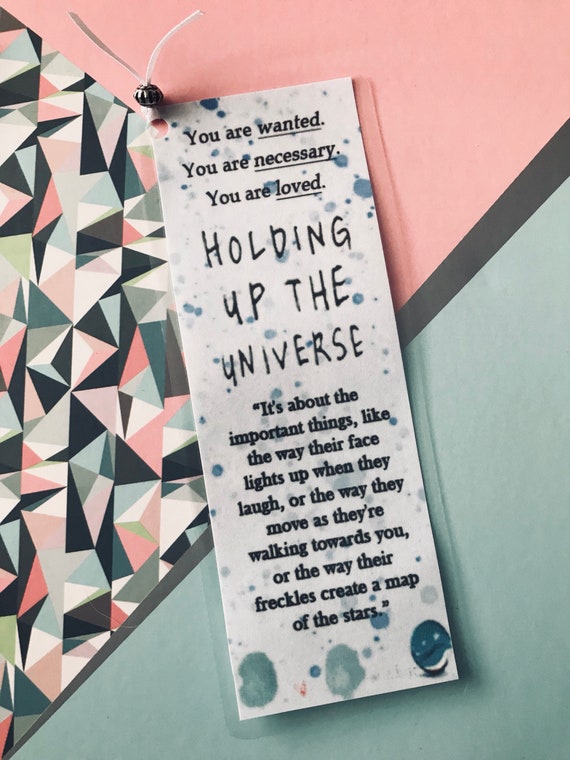
Holding Up The Universe


                Image result for holding up the universe quotes           Image result for holding up the universe quotes


Just finished this book by Jennifer Niven. It's a young-adult novel. As I've said before, I tend to like young-adult book, because I feel young adulthood is a challenging time for most people. It's the time you feel like you're not a kid anymore but neither are you an adult. You're still dependent on your parents and you really feel like you want to be independent. You're eager to complete your education and you want to support yourself on your own ASAP. Well, that was the way for me then. Anyway, let's go to the book.

The story is alternatively narrated by Libby Strout and Jack Messelin. Previously Libby was morbidly obese and was once dubbed America's fattest teen weighing 653 lbs at age 13. When she fell ill, she had to be removed from her house by a crane and the house had to be cut open to let her out. At the beginning of the book Libby is sixteen, had lost 302 lbs, now weighing about 250 lbs.and is starting high school at Martin Van Buren somewhere in the states.

Libby lost her mum to heart disease very suddenly when she was ten.


About Bereavement


This is a very compelling book. It managed to make me finished quite a number of pages while having coffee at Starbucks. It's about bereavement. A rather morbid topic but nonetheless a part of life. We lose our loved ones every now and then and one day we too will depart this world leaving our loved ones.

Natural disaster of gargantuan scale like that of Boxing Day of 2004 tsunami and the March 11th 2011 eastern Japan tsunami no doubt left a mark on us, even if we were not directly affected  in the sense that we did not lose any friends or family members. Images after images of death and destruction were very painful to watch.

To be frank, I don't think I have really grieved for anyone. I missed my late mum very much, yes, but I don't think that I was grieving for her. Because I was adopted by my aunt and was not brought up by my biological parents, I wasn't particularly close to my mum and my dad. Nowadays, I believe that mum and dad are in a good place, a happy place, a place of overwhelming peace, love and compassion. I believe that they are still watching over us, their children.


Friday, 1 November 2019

What I Eat Today

I need to lose about another 5 kgs for the sake of my left knee. 🤔 Hmmm....... I used to record what I eat everyday when I was dieting in 2016. Maybe I should do that again. This post was written in January, 2019.

What I eat today:
  1. A big mug of black coffee upon waking up at 6.00 am
  2. Another mug of black coffee with a teaspoon of butter and a teaspoon of coconut oil at around 8.00 am
  3. 3 pieces of Marie biscuits dipped in the power coffee in no. 2. 😋 Reminded me of the smell and taste of childhood.
  4. A bowl of oak-leafed lettuce, young corn and one hard-boiled egg with homemade cheese sauce 😋.
  5. 3 pieces of Brazil nuts and 8 pieces of almonds. Nuts are supposed to be good for health. They are low in carbs and are good sources of good fats. The Brazil nuts are yummy. You can very easily overeat them. 
  6. Half a can of rambutan (with the syrup drained).
  7. A slice of homemade no-bake cheese cake.
  8. Another mug of black coffee. 

Saturday, 19 January 2019

Why Do I Love My Cats?

I like lists. Today's list is the reasons why I love my cats.

The warm bundle of joy. My five-year-old tuxedo girl, Tam.
I love my cats...............
  1. because I cannot imagine living a life, without loving animals
  2. because loving and bonding with my pets comes naturally to me
  3. because most of the time I think my cats (and animals in general) have better characters than a lot of humans
  4. because each of my cats has its own personality and each has its own accentricity. They are just adorable to get to know. 
  5. because when I return home there is always a committee welcoming me
  6. because they are clean animals and they spend a lot of time grooming themselves. It is a lesson in persistence and sticking to routines. An exercise in mindfulness.
  7. because every so often, someone rubs himself or herself against my feet
  8. because we I call out to them, at times they would run back to me (even though many other times they just pretend they are deaf and ignore me 😊)
  9. because sometimes they sleep with me, especially on rainy days
  10. because when I'm reading someone will climb on to the back of the chair and lick my hair
  11. because when they are sleeping they look so peaceful and gorgeous my love for them becomes Mount Everest
  12. because my cats teach me a little on how to relax
  13. because when they play together, mock attacking, romping around, I feel my heart would burst with happiness
  14. because when I kiss them when they are asleep they make a very affectionate sound, even though they do not open their eyes
  15. because they purr and that is such a delicious sensation
  16. because when something saddens me, they are there, accepting me all the same
  17. because when I groom them, they close their eyes and lie down quietly enjoying the combing, touching and rubbing, they enjoy themselves
  18. because sometimes they sniff me out or nuzzle me with their moist noses
  19. because they follow me around when I clean the compound
  20. because they love to sleep on clothes which I have worn
  21. because I can be fat or thin, pretty or not pretty, gregarious or socially awkward, single or married or an old spinster, my cats will accept me, I am their human
  22. because I just love them, I don't really need a reason 😀

Of course, all that being said, loving a pet also means loving and taking care of them when they are sick or injured. Or even when they are old. Being patient with them when they scratch your furniture or when they spray onto your car tyres or once in a while they fail in their toilet habits . Using alternative methods as a deterrent, such as using squirt water bottle and never beating them when they misbehave. A pet is always part of the family and should always be treated as one.


The wise, mature gentleman, my beloved Mickey Benjamin


Interesting Articles

The following are some newspaper articles which I find very interesting. Just couldn't help myself uploading them onto this blog.


SORRY HARUSSANI, ISLAM IS NOT ABOUT EXCLUSIVITY
By AZRUL MOHD KHALIB
Published: March 5, 2016 07:32 AM GMT+8

- See more at: http://m.themalaymailonline.com/opinion/azrul-mohd-khalib/article/sorry-harussani-islam-is-not-about-exclusivity#sthash.XyJ3aEWX.dpuf 


MARCH 5 — Warning: If this column starts to sound like you have read it before and you think that you are having a déjà vu moment, you are probably right. It sometimes feels like a broken record dealing with and responding to our recalcitrant and wayward religious authorities.

We have just been told that it is a crime to publish, and to read the Quran in non-Arabic languages without accompanying Arabic text.

Stop the press! All printing of the Quran in Chinese, Spanish, Afrikaans, Russian, Chechen, Indonesian and English around the world must cease! After all, if it is supposedly a wrong practise here, it must be wrong elsewhere too. After all, Islam is a global religion.

The recent warning from Harussani Zakaria, chairman of the Home Ministry’s Al-Quran Printing, Control and Licensing Board, is representative of what’s gone wrong with the practise and teaching of Islam in this country.

While Muslims in other countries are busy making their religion increasingly accessible, friendly and inclusive to those not of the Islamic faith, our religious authorities are moving in the exact opposite direction.

Far from sounding enlightened, progressive and welcoming, individuals such as Harussani are making Islam in Malaysia sound and appear to others as arrogant, irrational, suspicious and disdainful of other religions.

Maybe Harussani is more knowledgeable than I am in this matter, but I am almost certain that this kind of paternalistic approach is neither in accordance with the teachings of Prophet Muhammad nor adhering to the principles of Islam. But what do I know? I don’t write or understand Arabic so Harussani can perhaps provide some enlightenment.

I am tired of our religious authorities treating Islam like it is some exclusive club and they alone determine who gets to join and the conduct of those who are members. Historically, we have seen this behaviour before where the clergy of an institutionalised religion attempts to impose a monopoly on faith and its teachings under the guise of “only the learned and knowledgeable” (i.e themselves) can communicate with God and not be led astray.

The reality has less to do with God but more to do with the very earthly pursuit of power and control over others. Over the years, the ever-expanding sphere of influence of Islamic institutions in Malaysia have gone increasingly unchecked and it can be argued that through their actions, have repeatedly violated Constitutional limitations and even expressed disdain for those limits. Yet, very few have dared to challenge them and even fewer have stood to defend those who have done so. Just ask Rosli Dahlan.

I have travelled to many places in the world where Islam has taken root and flourished. Based on my own understanding, Islam is not and has never been about exclusivity and superiority of faith.

It is arguably a violation of Islamic teachings to insist on exclusivity as touted by Harussani as it prevents others from acquiring knowledge, learning and understanding Muslims and Islam.

The Prophet Muhammad (pbuh) himself, through his own documented practises and teachings, practised inclusivity, humility, and believed in the importance of knowledge and most importantly, sharing it with others.

Exclusivity results in misunderstanding, ignorance, conflict, bigotry and irrational fear. It breeds contempt for others and arrogance.

One of the most common complaints and gripes by the Islamic authorities and clergy in this country is that they are frequently misunderstood and that others must seek understand and learn about IslamFair argument, until you make important texts like the Quran inaccessible. Read the notice from the Kementerian Dalam Negeri again and you will realise that what it is actually saying is that reading the Quran is off limits to non-Muslims (need to take Islamic ritual ablutions to touch and read the Quran) and to those not proficient in the Arabic language.

Speaking of reading, I have struggled to explain to those who are non-Muslims how it is possible for a person to be able to read the Arabic in the Quran yet not understand a single word of it.

Because that is how the Quran is often taught (can a person be taught when the language of the lesson itself is not understood?) here in this country.

Harussani’s statement itself affirms that you can read without understanding and it is okay. I really don’t understand that and never have. Wouldn’t it be meaningless without understanding the words of what you are reading? Maybe it’s just me but that is my individual cross to bear.

Oh, final question for the mandarins of the Kementerian Dalam Negeri: is it also a crime to download digital versions of the Quran such as eBooks or apps in other languages? Are we allowed to think for ourselves or do we need to ask for your permission?

Those who demand for exclusivity and impose such restrictions and monopolies of knowledge convey a lack of depth in their awareness and understanding of how Islam is practised elsewhere around the globe and of its co-existence with other world religions.

Get a grip.

* This is the personal opinion of the columnist.


THE RISE OF RELIGIOUS BUFFOONERY IN MALAYSIA
By: Farouk A. Peru
Published: February 12, 2016 07:14 AM GMT+8


See more at: http://m.themalaymailonline.com/opinion/farouk-a.-peru/article/the-rise-of-religious-buffoonery-in-malaysia#sthash.KNmOFUAa.dpuf


FEBRUARY 12 ― When any industry gets inundated with players, the quality of its products can be very questionable. It was true with the PC industry when IBM PC opened its doors to compatibles thus giving way to some very sub-par products.

It was also true in the movie industry when stellar movies inevitably inspired copycats. The Blair Witch Project and Sixth Sense were pioneers in this regard and inspired a number of inferior films.

This is also unfortunately true with the industry of religion. While there are some very inspiring speakers who can motivate the layperson to become a better human being, there are also those who tap into the religious market by providing sheer entertainment. They, perhaps unknowingly, act like buffoons in order to boost their popularity.

What makes a religious buffoon? While some may point to the speakers’ demeanour and style, I have to disagree.

Humour can actually make difficult subjects much easier to digest, in my experience. I have a vast collection of “Idiots Guides” and “For Dummies” books which attest to that fact!

No, rather buffoonery comes from the puerility of the subject matter and worse, the superficial manner in which it is handled.

Like any economic endeavour, the religious industry needs to keep coming up with fresh products to keep the target market interested else it becomes stale or irrelevant.

The inspiration for this piece came earlier this week in my Facebook feed which I use to observe the religious social media. I chanced upon a lecture by this ustaz (religious teacher) who claimed that the voices of women is considered “aurat” in Islam.

“Aurat” is an imported word from Arabic which means “modest or private area” in everyday lingo. The ustaz who seemed to be talking to an exclusively male audience, claimed that if a male were to engage in a telephone conversation with a woman ― however innocent the conversation may be ― that man would be sexually aroused.

He then asked a member of the audience if this was true and the answer came in the negative. Instead of accepting that different people have different levels of acceptable stimuli, the ustaz then accused that gentleman of having a low sex drive!

The next person the ustaz questioned hurriedly replied to the affirmative that indeed women’s voices can be seductive. The ustaz then added that not only are women’s voices arousing, they can actually cause a man to emit pre-ejaculate!

One wonders how this ustaz survives in daily life. When he goes to a restaurant and a waitress inquires about his order, would he then be in a state of arousal?

But it does not end there. The ustaz manages to surreptitiously add in some misogynistic elements to the seemingly receptive audience.

At that point, he adds that that is the reason we cannot have female leaders and khateebas (women who give sermons) unless the congregation is all female. The measure of a society’s backwardness is apparently when women take the helm of leadership, he asserts.

This is from the same individual who criticises women for shaping their eyebrows, claiming that it is physical modification! Comparing eyebrow shaping with plastic surgery must be the very definition of puerile and superficial.

The phenomenon of the religious buffoon is, in reality, an indictment on the society which produces it. Without the religious consumer, these people would need to find real jobs, perhaps in the entertainment industry given their talents to amuse listeners.

The only difference is the entertainment industry actually provides some benefit in that it gives us a means to relieve stress and to enjoy ourselves.

These religious buffoons, however, can actually cause damage with their sinister remarks. With the aforementioned ustaz for example, male members of his audience may actually force their beliefs on female members of their respective families.

This is when simple entertainment translates into social detriment. Malay-Muslims need to stay away from such folks.

*This is the personal opinion of the columnist.


buffoon (n): a clown, a jester, a fool, a ridiculous person.
buffoonery (n): a ridiculous behaviour which can be amusing.

Food for Thoughts 17012019

The following three are articles by Faisal Tehrani are very good for introspection and deep reflection. They are indeed worth their weights in gold.

Melayu pandai buat bakul
Faisal Tehrani - January 17, 2019 10:15 AM

Dalam tahun 2002, Profesor Diraja Ungku Aziz pernah menulis sebuah artikel pendek berjudul “Tragedi Pemikiran Melayu” yang mana beliau menukilkan begini: “Saya rasa Melayu tidak sanggup berubah; perspektif mereka terhad, tidak suka menyiasat dan mereka tidak mahu berfikir dengan mendalam.”

Pun, Ungku Aziz menegaskan ia bukanlah perangai dan sikap asal Melayu. Tiga hal yang disebutkan oleh beliau itu, menurutnya lagi, adalah gejala atau fenomena baharu.

Kita harus akur, 3 hal yang dinyatakan ini membantut dan membonsaikan tamadun.

Ungku Aziz meyakini Melayu lampau mempunyai kemampuan ekonomi dan strategi pemerintahan yang hebat. Beliau antara lain menyebutkan kegemilangan, kepintaran dan kebijaksanaan Melayu itu dapat ditimba menerusi “Hikayat Raja-Raja Pasai”, dan lebih banyak lagi dalam pantun-pantun Melayu.

Di dalam pantun Melayu, kata Ungku Aziz, terserlah sifat pedagang Melayu yang biasa berdikari, berani, cerdik ilmu dagang dan sedia menanggung risiko. Seperti yang telah saya sebutkan tadi, Ungku Aziz bagaimanapun menyatakan orang Melayu tidak lagi seperti dahulu. Tidak lagi seperti pada zaman raja-raja Pasai, dan tidak lagi ketika mereka fasih dan licik berpantun.

Ungku Aziz dalam artikel “Tragedi Pemikiran Melayu” itu misalnya dengan yakin menyatakan punca pertama Melayu terperuk dan menjadi statik itu adalah kerana penjajah meletakkan “apa yang dihasilkan oleh Melayu sebagai second class”. Justeru, ini “membawa orang Melayu kepada perspektif jati diri yang salah”.

Hal ini diburukkan lagi apabila keduanya, orang Melayu tidak berani mempersoalkan.

Ungku Aziz menyinggung betapa tiadanya budaya “inquiry mind” yang menunjukkan juga tidak ada sikap saintifik.

Ungku Aziz menegaskan Melayu “tidak sedia dan berani bertanya, yang akhirnya menyebabkan kita tidak berani menghadapi cabaran”. Oleh sebab tiadanya pemikiran saintifik, Melayu menjadi selesa. Agama dan tunggak kuasa misalnya menjadikan Melayu selesa. Maka itulah yang disogokkan Inggeris sebagai penjajah.

Saya petik kata-kata Ungku Aziz di sini:
“Orang Melayu tidak suka sains, dia suka agama, jadi ajarlah tentang agama. Dia suka dengan raja dia, ajar Melayu buat bakul.”

Menurut beliau, Melayu memerlukan “trouble makers”, tetapi malangnya “trouble makers” Melayu hanya timbul selepas Perang Dunia Kedua setelah kemasukan Jepun.

Tentu “trouble makers” penting dalam menghasilkan tamadun. Adalah alamiah sesuatu yang bergeser akan menghasilkan produk. Tiada pergeseran tiada penerbitan.

Akhir sekali, Ungku Aziz menyatakan orang Melayu jadi mundur dan terhempuk kerana pendekatan yang ada untuk membangunkan Melayu adalah “dengan wang ringgit dan kebendaan”, yang menurut beliau lagi, sama sekali tidak betul.

Saya ulangi, sangatlah senang menyalahkan orang (baca: penjajah) oleh kelemahan diri kita sendiri.

Bagaimana kalau kita menggunakan pula pendekatan dan kaedah Malik Bennabi, sambil-sambil mengambil kritikan Ungku Aziz.

Bennabi lahir pada 1905, seorang pemikir Algeria yang banyak mencabar penjajahan Perancis dengan idea-ideanya. Beliau kurang dikenali di rantau sebelah kita kerana karangan yang dihasilkan adalah di dalam bahasa Perancis dan Arab.

Bennabi semasa memacu gerakan kemerdekaan Algeria, menegaskan di dalam tulisannya “Vocation de l’Islam” dan “Shurut al Nahdah” bahawa umat Islam perlu merenungi paksi tamadun masing-masing.
Umat Islam juga harus menghindar diri menjadikan tasawuf sebagai tunjang kerana menurut Bennabi, tasawuf adalah “satu pelarian, yang cukup berkembang pada zaman kemunduran Islam”.

Dalam kuliah tahun 1964 yang kemudian diterbitkan sebagai “Mushkilah al-Hadarah”, Bennabi menyatakan tamadun bukan diukur dengan penghasilan produk. Ini kerana produk adalah natijah, dan bukannya sebab. Tamadun tambah Bennabi, adalah sebab, “natijah tidak akan mendahului sebab”.

Maka untuk mengukur tamadun, kita tidak boleh menilai berdasarkan produk (dalam hal ini kemajuan) tetapi yang mencipta penghasilan atau produk itu.

Dalam hal ini, Bennabi meminta pembacanya menumpukan perhatian kepada manusia dan idea. Inilah sebab. Iaitu hubungan yang terjadi antara kemahuan dan kemampuan masyarakat untuk memajukan diri masing-masing.

Seterusnya pemerhatian Bennabi adalah terhadap syarat-syarat berasaskan akhlak yang mana itulah kebolehdayaan masyarakat dalam menangani segala beban.

Dalam karya-karyanya, Bennabi bukan tidak menyalahkan penjajah. Beliau sedar penjajah Perancis telah melumpuhkan sumber daya dan kekuatan bangsa Algeria. Akan tetapi, Bennabi menggunakan kaedah merenung dan membetulkan diri yang mana sangat diperlukan oleh bangsanya pada waktu itu.

Pendekatan yang sama harus digunakan dalam memeriksa Melayu. Sudah tentu kita tidak dapat menafikan betapa Melayu telah ketinggalan oleh sebab cengkaman penjajah.

Ungku Aziz benar. Inggeris telah menggendalakan kita. Dan kita memang sedar betapa Melayu telah mengalami proses pemomokan sehingga mereka sendiri meyakini mitos yang mereka malas.

Akan tetapi, Melayu mesti akur dan mempunyai kekuatan syarat akhlak untuk mengukur kebolehdayaan dalam menangani beban mendatang.

Melayu mesti bersedia menimbangkan bahawa Melayu sebagai manusia dan anggota masyarakat, dan idea-idea mereka sangatlah terbatas dalam soal “suka agama, jadi ajarlah tentang agama. Dia suka dengan raja dia, ajar Melayu buat bakul.”

Dua beban besar Melayu ialah agama, dan gasakan feudalisme. Selagi tidak lepas dari dua ini, Melayu masih terbatas dan terkepung.

Ini tidak bermakna menggantikan 2 aspek itu akan menerbitkan Melayu menjadi maju dan bertamadun. Yang dimaksudkan di sini adalah agama yang bagaimana yang ingin Melayu pelihara dan pupuk? Seperti yang ditegaskan Bennabi, jika agama itu adalah tasawuf yang tumbuh ketika era mundurnya umat; maka itu adalah agama yang tidak menerbitkan idea dan kemahuan.

Sementara kuasa feudal, jika ia adalah kuasa feudal yang berupaya memacu kehebatan dan kegemilangan seperti pada zaman “Hikayat Raja-Raja Pasai” menyiapkan strategi untuk mendepani Majapahit maka tentulah ia adalah paksi kuasa yang sihat dan perlu.

Oleh sebab itu Melayu perlu melihat diri mereka dalam 2 ruang tersebut. Jika obsesi dan nafsu Melayu terhadap agama adalah yang bersifat pegun di mana pesona Melayu adalah kepada hal-hal fekah yang demikian ranting, maka bagaimanakah Melayu akan kembali mencetus tamadun?

Atau jika Melayu masih tersekat oleh boleh dan tidak boleh kerana tertakluk kepada daulat dan derhaka, maka bolehkah Melayu menelurkan idea besar untuk membina peradaban?

Kita mungkin boleh bersepakat bahawa penjajah memang mempunyai saham besar dalam menekan dan menggendalakan kita, umat Melayu-Islam, untuk berjaya. Ubatnya belum tentu Islam-Melayu. Malah selama ini, Melayu Islam itulah racunnya.

Jika Islam yang dipilih kehilangan dan kegagalan wacana untuk mencetuskan sesuatu yang baharu, maka seperti yang disebutkan Bennabi, kita akan menuju kerosakan dan kemusnahan.

Penawar yang ingin diberikan oleh Bennabi kepada umat Islam, seperti yang ditulis dalam Ta’ammulat dalam tahun 1960 (yang menurut saya boleh diacukan kepada Melayu) adalah untuk maju, masyarakat Islam mesti memberikan jaminan sosial kepada individu masyarakat.

Masyarakat mundur tidak memberikan apa-apa jaminan sosial kepada individunya.

Ada banyak ruang lingkup jaminan sosial. Salah satu jaminan sosial yang Melayu hari ini tidak berani lepaskan ialah memberikan hak kepada kaum minoriti secara sepatutnya.

Untuk mewaraskan penafian hak tersebut, Melayu berlegar-legar di sekitar dua tiang: agama dan kuasa. Jadi, 2 tiang yang harus membebaskan, malah menjadi kongkongan.

Seperti dinyatakan oleh Ungku Aziz dalam tahun 2002: “Dia suka agama, jadi ajarlah tentang agama. Dia suka dengan raja dia, ajar Melayu buat bakul”.

Artikel ini adalah pandangan penulis dan tidak semestinya mewakili FMT.


Bukan pelacur saja masuk neraka, tuan guru juga

Faisal Tehrani, Free Malaysia Today - October 5, 2018 9:00 AM
Faisal Tehrani adalah nama pena Dr. Mohd Faizal Musa
dan penulis 7 buku yang diharamkan kerajaan Malaysia

Baru-baru ini Mahkamah Tinggi Syariah Kuala Terengganu menjatuhkan hukuman penjara 6 bulan dan 6 sebatan terhadap seorang ibu tunggal selepas dia mengaku bersalah di atas pertuduhan cuba melacurkan diri. Wanita yang bekerja sebagai pencanting batik sambilan tersebut adalah ibu kepada seorang kanak-kanak perempuan berusia 7 tahun.

Dakwaan mengikut Seksyen 25 Enakmen Kesalahan Jenayah Syariah (Takzir) Terengganu 2001 tersebut adalah kerana perbuatannya yang bersiap atau cuba melacurkan diri. Wanita yang terdesak terbabit ditahan bersama seorang pelanggan antara 11.20 dan 11.45 malam.

Pendakwaan dilakukan oleh Pendakwa Syarie, Khazmizan Abdullah, manakala tertuduh tidak diwakili peguam. Dalam satu prosiding, wanita malang ini mengaku terjebak dalam kancah pelacuran kerana kehidupan yang miskin dan memerlukan wang untuk menyara kehidupan. Ia juga untuk menyarai anak perempuannya yang dijaga oleh kakaknya di Klang.

Membaca berita di atas saya teringat sebuah novelet karangan Sasterawan Negara A. Samad Said yang langka, dan kurang diketahui orang, “Ka-Mana Terbang-Nya?”, diterbitkan dalam tahun 1966. Novelet ini dibukukan sekali dengan sebuah cereka tivi dengan judul “Burong Senja”.

“Salina” sebuah lagi karya Pak Samad yang lebih dikenali diterbitkan pada 1961. Jadi dapat dikatakan, setelah 6 tahun, Pak Samad yang sedang mengecap gelar pengarang muda pada ketika itu sedang berada di puncaknya dan keberanian beliau mencerap situasi masyarakat bawah sambil mengkritik “raja” dan “menteri” dalam “Ka-Mana Terbang-Nya?” dapat dipandang tinggi.

Novelet “Ka-Mana Terbang-Nya?” yang dilabel “cherpan” (cerpen panjang) oleh penerbit menyorot kehidupan sekumpulan pelacur di sebuah kampung bernama “Kampong Alang Sunti”. Latar kampung yang kumuh, kotor, terdesak dan terperuk digunakan sebagai simbol oleh pengarang untuk menggambarkan nestapa hayat dan hidup seharian masyarakat yang tinggal di situ.

Meskipun hanya sebuah novelet, Pak Samad mengangkat dengan sungguh terperinci kehidupan masyarakat pekerja seks yang buntu, bingung, sesak dan tertekan untuk meneruskan nasib mereka.

Permulaan karya tersebut menampilkan watak utamanya Tengku Shaion yang merenung penderitaan dan nestapa sebagai pekerja seks, bergilir dengan sudut pandang Anidah, seorang ibu tunggal dan anaknya Fidah, yang kelihatannya tinggal bersama-sama Tengku Shaion tersebut.

Novelet ini bermula dengan gambaran jelas, keinsafan, kepedihan dan keazaman para pelacur untuk keluar dari lingkaran setan yang menggari dan mencekam mereka. Namun demikian, tanpa pendidikan dan keadilan untuk wanita, pekerja-pekerja seks ini kelihatan hanya mengimpikan nasib yang baik-baik; agar dikahwini dan dapat meninggalkan dunia yang lara itu. Para lelaki yang berada di sekitar mereka malangnya adalah lelaki yang mengambil kesempatan, atau lelaki samseng kaki gaduh yang hanya berpusat hawa nafsu.

Seawal halaman 11, Pak Samad menunjukkan tiadanya usaha dari kelas penguasa untuk menangani akar isu sebenar. Yang ada dalam agenda penguasa ialah pembanterasan moral jahat dan buruk, tanpa menimbangkan keadaan di lapangan, dipetik dari novelet tersebut:

“Beberapa waktu ini akhbar heboh benar mengabarkan tentang gerakan menangkap wanita2 saperti Tengku Shaion. Pelachor mesti di-singkirkan, mesti ditangkap, di-masokkan ka-dalam rumah pemulehan akhlak. Bagitu-lah selalunya berita yang berlanjut2 itu berulang. Dua tiga tahun dahulu besar benar berita tentang ura2 hendak mendirikan rumah pemulehan akhlak itu, dan sekarang khabar itu bergema lagi.”

Novelet “Ka-Mana Terbang-Nya?” menjelaskan kepada kita mengapa seseorang pekerja seks terpaksa melacur dan kehendak ikhlas mereka untuk keluar dari kancah yang hanyir tetapi sering kali ia digagalkan oleh keadaan. Tanpa pemberdayaan dari atas adalah mustahil sama sekali untuk mereka kuat memanjat jurang yang dalam.”

Dalam bahagian lain pada novelet tersebut, para pelacur yang jauh lebih melarat dan tidak laku jika dibanding Tengku Shaion, seperti Apon, Maisarah, Ramisah, Jalilah, Molly, Sui Koon, dan Jeya membincangkan apakah mereka akan masuk syurga kelak, atau dibakar di dalam neraka.

Saya memetik salah satu perenggan tersebut: “Kita semua satu neraka-lah. Dalam api, dalam ayer panas mendideh. Lu, gua Sui Koon, tau?” kata Apon. Itu Jeya, semua, plluss masok neraka, tau?” kata Apon. “itu Pa’ Nordin pun masok juga – dia sama becha2-nya sa-kali.”

Novelet “Ka-Mana Terbang-Nya?” karya Pak Samad ini sememangnya tidak membincangkan wahana pemberdayaan masyarakat agar pelacur-pelacur ini dapat keluar dari neraka dunia. Tentu tiada program yang disarankan oleh beliau. Hanya ada laporan penderitaan di sini.

Akan tetapi seperkara yang sangat penting ialah kebalikan dari itu, ia menunjukkan betapa masyarakat tidak peduli, sementara penguasa yang bertanggungjawab hanya menebas lalang di peringkat bawah.

Kesenyapan kumpulan yang ramai terhadap ketidakadilan meletakkan masyarakat secara umumnya di jalan menuju kebejatan. Masyarakat yang diam akan ketidakadilan dan kepincangan adalah umat yang binasa perlahan.

Sedang, satu suara yang disahut dalam melawan ketidakadilan akan mengeluarkan masyarakat seluruhnya dari jalan kemusnahan tersebut. Keadilan akan menerbitkan kebudimanan di tengah umat.

Di dalam karya ini, Pak Samad mempersoalkan kaum agamawan seperti Zabar yang bukan melakukan kebajikan, dan mencari jalan yang makruf untuk membantu pekerja seks ini keluar dari kesusahan; sebaliknya watak tipikal agamawan ini mengambil kesempatan dari kehinaan orang susah dengan mengetuk ongkos para pelacur ini.

Saya mengutip bahagian yang dimaksudkan dari novelet tersebut:

“Yang boleh masok shurga tu-hah sorang, tu-hah, tu,” kata Jalilah, sambil menunjokkan Zabar berambut puteh jarang-jarang berusia kira2 54 tahun yang sedang menggoreng pisang di-hadapan rumah papan dua tingkat-nya yang chondong ka kiri.

“Itu? Itu lagi masok neraka,” kata Sulimah mengetap2kan gigi. “Kau pikir dia sembahyang terhonggang hongget tu dia tentu2 masok shurga? Heh, belum tahu, belum tahu.”

Maisarah pula menambah: “Kata saja sembahyang, ingatkan Tuhan siang malam. Tapi, tapi lewat sewa rumah sikit saja, dia dulu menjerit “Hei mana sewa rumah? Lu orang mau tidor free-kah? Pandai chari jantan saja-kah?’ kata-nya. Huh, ta’ timbang-rasa. Ta’ ada isi perut sa-sama manusia. Orang gitu na’ masok shurga? Taik anjing! Sama kita juga-lah dia. Berebuuuuuusss masok neraka, kau chari-lah, ya? Berebuuuuuussssss, kata aku, berebussssssssss!”

Watak seperti Zabar ini tentu sahaja wujud di Terengganu. Berapa banyak pondok dan tuan guru di Terengganu? Mengapakah tiada pemberdayaan dilakukan untuk kelas bawah yang terperuk begini?

Apakah pegawai pejabat agama berasakan mereka akan terlepas dari pertanyaan di akhirat kelak, bahawa mengapakah kalian tidak menyediakan sarana dan jalan untuk pelacur ini keluar dari neraka dunia?

Ini kerana tiada siapa dilahirkan untuk sanggup melacur.

Apakah Tuhan akan hanya bertanya kepada para pelacur, mengapa kamu mengangkang? Lantas tidak menanyakan kepada ulama kenapa tiada kalian melakukan kerja makruf memberdayakan mereka agar terselamat dari kehanyiran? Tidakkah Tuhan akan bertanya kepada para penguasa, apakah agenda dan program yang telah kalian susun agar perempuan melarat seperti Anidah tidak perlu melacur di akhirnya dan lingkaran setan itu berterusan dengan anak-anaknya pula?

Dalam tahun 1966, Pak Samad bertanya. Dalam tahun 2018, watak agamawan dan para pekerja seks masih juga terhempuk oleh kenistaan yang tiada penghujung.

Kerana itu pertanyaan Pak Samad bersipongang dan menjadi talun dalam telinga melesat ke enjin benak; “Ke Mana Terbangnya?”

Artikel ini adalah pandangan penulis dan tidak semestinya mewakili FMT.


Menyingkap rahsia sejarah gugup di Pulau Kukup
Faisal Tehrani - January 10, 2019 9:46 AM

Dalam tahun 1878, Sultan Abu Bakar dari Johor mempunyai hubungan yang baik dengan hartawan Arab Peranakan di Singapura, iaitu beberapa keluarga Sayid dengan kekayaan yang luar biasa.

Maksud saya, untuk era itu, kekayaan mereka sukar diucapkan dengan kata-kata.

Sebagai contoh, pada 1870, Syed Ahmad AlSagoff membeli sebuah banglo 10-bilik di Beach House, Singapura daripada Elizabeth Clarke dengan harga $5,450 dolar Sepanyol. Banglo rekaan Robert Scott di Singapura pada tahun 1830 memang diketahui sungguh mewah.

Sudah tentu kekayaan hartawan Arab dari keluarga AlSagoff ini tidaklah datang bergolekan dari Hadhramaut, melainkan kerana kelicikan mereka berhubungan dan memasang jaringan niaga yang menguntungkan bersama-sama penjajah British, dan sudah tentu, kerabat diraja.

Sebagai umpama, AlSagoff akan dijemput untuk berdiri di sebelah Setiausaha Kolonial Inggeris, R.J. Wilkinson di Victoria Memorial Hall dalam banyak acara rasmi.

Malah dalam tahun 1923, apabila Putera Wales melawat Singapura, Syed Omar Mohamed AlSagoff menghadiahkan replika kapal HMS Malaya kepada penjajah yang kosnya adalah $10,000. Replika itu sungguh besar sehingga ketibaannya menjadi satu pesta-pestaan di pulau tersebut.

Dalam tahun 1935, sekali lagi keluarga Arab mengikrarkan bai’ah kepada Inggeris menerusi sambutan naik takhta King George V dengan membina sebuah bahtera berlampu-lampuan dengan tertera tulisan bercahaya “God Save The King”.

Peguam keluarga AlSagoff juga bukan calang-calang. Beliau hanya mendapatkan khidmat guaman dari firma British, iaitu Messrs. Donalson dan Burkinshaw di Singapura.

Surat rasmi bertarikh 1 Mac 1923 yang menjelaskan Pulau Kukup (juga dieja Kukub dan Cocob) dihadiahkan dalam tahun 1878 dan 1884 kepada AlSagoff, telah dihantar melalui firma guaman B.R. Whitehouse kepada firma Drew dan Napier.

Dalam tempoh itu juga, AlSagoff sering mengiringi Sultan Abu Bakar dari Johor dalam banyak pelayarannya ke Eropah, dan beliau diberikan kepercayaan menguruskan banyak hal-ehwal berniaga dan berdagang milik Sultan Johor. Beliau diberikan pingat dan gelaran diraja dalam tahun 1886, dan merupakan antara orang biasa yang pertama diberi anugerah seumpama itu.


Menghadiahkan sebuah pulau kepada mana-mana hartawan atau orang kegemaran adalah sesuatu yang agak biasa pada kurun tersebut.

Sultan Hussein Shah (1819-1835) misalnya pernah memberi Pulau Karimun kepada Sayid Aqil dalam tahun 1825.

Oleh itu bukanlah aneh Pulau Kukub diberikan kepada AlSagoff yang akrab dengan raja. Bahkan menurut catatan sejarah, beliau dibenarkan untuk memilih sendiri mana-mana pulau idaman hati.

Maka, AlSagoff belayar mengelilingi perairan Johor untuk mencari pulau yang cucuk dengan keinginannya.

Pada mulanya beliau inginkan sebuah pulau di sebelah timur tetapi kebanyakannya telah dihadiahkan kepada saudagar Cina bernama Wong Ah Fok. Orang Melayu mungkin membaca, “Nasib baiklah Pulau Kukub jatuh ke tangan AlSagoff” memandangkan beliau seorang Arab.

Tambahan pula AlSagoff dikatakan menjadi tali penghubung antara kerajaan Othmaniyyah dengan Sultan Abu Bakar.

AlSagoff membuat permohonan rasmi untuk mendapatkan pulau ini kepada Datuk Penggawa Barat, Datuk Abdul Samad Ibrahim. Tanah beliau ditandai sebagai “kiri mudek Sungai Permas” di sebelah kiri, “kanan mudek Sungai Pontian Besar” di seeblah kanan dan ke utara sebagai “kiri mudek Sungai Jeram Batu yang di dalam, Sungei Pulai” iaitu menghala ke kawasan hutan bakau.

Di bahagian lain pulau itu, ia telah diberikan kepada saudagar Cina, Tan Eng Kwang yang memperoleh surat sungai pada tahun 1878 dan 1880.

AlSagoff kemudian menambah lagi koleksi tanahnya di Ayer Masin, Penerok, Rambah, dan Permas. Semuanya ditanami dengan gambir, lada hitam, pinang, rumbiah, kelapa, getah, kopi dan nanas.

Beliau mentadbir Pulau Kukub dari rumah mewahnya di Bukit Tunggal, Singapura. Akan tetapi, beliau akan melawat pulau tersebut dari masa ke semasa. Alsagoff and Co mendapat keuntungan berlipat kali ganda.

Pelaburan AlSagoff ini mengubah sama sekali Pulau Kukup dari sebuah pulau lindungan dan tempat persembunyian lanun dalam awal kurun ke-19. Terdapat jeti dan pangkalan, juga jalan raya.

Beliau malah menjadikan Pulau Kukup negeri kecilnya dan memberi nama sebagai “Constantinople Estate” dengan menerbitkan mata wang sendiri bernilai $2.00, $1.00, 50 sen dan 25 sen.

“Constantinople Estate” ini bagaimanapun bukanlah syurga Othmaniyyah, tetapi bahkan menjadikan Pulau Kukup sebuah neraka.

AlSagoff mengasaskan syarikat perkapalan, Alsagoff Singapore Steamship and Co yang membawa jemaah haji ke tanah suci. Sebelum itu, monopoli pengangkutan laut menghantar jemaah haji adalah di tangan Dutch East Indies.

Caj pelayaran ke Jeddah itu sangat tinggi sehinggakan ramai jemaah haji mengadukan hal kepada pejabat Suruhanjaya British di Jeddah.

Selain caj mahal, AlSagoff turut menggunakan kaedah pembayaran “contract-ticket” yang terselindung kejahatan. Pada mulanya kontrak tiket pelayaran itu hanya ada di dalam bahasa Inggeris (sehinggalah ditegur oleh Othmaniyyah agar memasukkan bahasa Melayu), sedangkan ketika itu masih ramai jemaah haji yang buta huruf.

Salah satu perjanjian pelayaran yang kurang difahami oleh jemaah haji adalah jika mereka tidak dapat membayar pinjaman balik, mereka akan berhutang dan untuk melunasinya perlu bekerja hanya di Kukup atau “Constantinople Estate” sehingga selesai.

Jumlah jemaah haji, khusus dari Jawa yang tersadai di Mekah kerana caj mahal, dan kemudian tidak dapat membayar semula tiket pelayaran pergi balik, sangat ramai.

Mereka menjadi buruh di Kukup, dan keadaan sangat buruk.

Arthur Alban dari pejabat Suruhanjaya British di Jeddah membantah kaedah ini. Menurut beliau, perjanjian itu sangat berat sebelah, tidak difahami oleh mereka yang menyetujuinya di awal, dan lebih malang ialah kebanyakan mereka terus diminta bekerja di ladang milik AlSagoff meskipun hutang telah usai.

Sejarawan J.M. Gullick dalam tahun 1984, ketika menyampaikan kuliah sempena James C. Jackson Memorial Lecture di Adelaide, Australia mengatakan dalam kuliah berjudul “The Entrepreneur in Late 19th Century Malay Peasant Society”, AlSagoff berjaya memperkenalkan semula konsep hamba piutang di Kukup.

Padahal lama sebelum itu, gejala perhambaan dalam kalangan orang Melayu kerana gagal membayar hutang telah lama dihapuskan.

Saya ingin memetik kekesalan beliau akan keadaan perhambaan dan ketidakadilan ini dalam bahasa asal:

“Capitalism in its least attractive guise is found in Johor and much of it was a crude exploitation of indentured Javanese labour. Sultan Abu Bakar liked to display his plantings of tea, coffee and cocoa to European visitors. Some of the settlement along the west coast of Johor were developed by the use of imported Javanese ‘orang tebusan’ who had been sold to local peasant landowners by ‘sheikhs’ who had brought them in from Java to work off their debts.

“The most notorious case was the estate of Syed alSagoff on the island of Kukub off the Johor coast. Here there were 10,000 acres under sago, coconut, areca and coffee in a remote place beyond any form of supervision. Many of the Javanese labourers were pilgrims to Mecca who had been fleeced or swindled out of their money in Arabia and so had been shipped back to Singapore at the expense of the Singapore Arab merchant, Syed alSagoff. In return for this aid they entered into contracts by which they agreed to repay the loan through working as labourers.

“Alsagoff had no agricultural land in Singapore, where the contract should have been performed but he and his European lawyers found means of getting the Javanese transferred to Kukub. This surely was debit-bondage come again.”

Perlahan-lahan, nama Pulau Kukup yang berasal dari kata “terlungkup” kerana perahu diterbalikkan ombak atau diserang lanun disandarkan pula dengan kegiatan perhambaan.

Justeru, Pulau Kukup menyimpan sejarah gugup.

Doa hamba yang diperlakukan dengan zalim ini akhirnya makbul. “Constantinople Estate” dilanda pelbagai masalah, dan AlSagoff menjual sebahagian tanah kepada Peneiro Planting Syndicates dalam tahun 1906 dan pada 1926, pemerintah British mengambil kembali tanah pertanian penuh derita itu.

Pulau Kukup sayogia eloklah berada di bawah lindungan bunian, seperti mana lagenda tempatan Pulau Kukup menceritakan, ia adalah tempat mandian lima puteri.

Kadangkala berada di bawah pemerhatian dan jagaan bunian jauh lebih baik berbanding berada di tangan kapitalis dan sekutunya seperti AlSagoff.

Apatah lagi hari ini kita semua telah memilih sistem politik yang tiada hamba tiada tuan. Bahkan rakyat adalah tuan. Seperti yang telah diingatkan oleh J.M Gullick dalam tahun 1984.

Kini Pulau Kukup telah diiktiraf sebagai tapak RAMSAR (Kawasan Tanah Lembap Berkepentingan Antarabangsa) pada tahun 2003. Terdapat 27 spesis bakau di sini dan terdapat program konservasi oleh Tabung Alam Sedunia.

Hujung bulan ini, pada 31 Januari, adalah sambutan ulang tahun ke-15 pengisytiharan tersebut oleh Biro RAMSAR di Geneva, Switzerland.

Moga pulau ini terus dilindungi bunian, buat selama-lamanya.

Artikel ini adalah pandangan penulis dan tidak semestinya mewakili FMT.